


Online Trauma & PTSD Therapy in California
Trauma doesn't always look like what people expect. Sometimes it shows up as flashbacks or nightmares. Other times it's a constant sense of being on guard, a body that won't relax, or a pull to avoid anything that reminds you of what happened.
If these experiences are getting in the way of your relationships, work, or peace of mind, you don't have to keep managing them alone. I offer structured, evidence-based telehealth therapy for adults across California, including Bishop, Mammoth Lakes, and the Eastern Sierra.
Signs that trauma may be affecting you
Everyone responds to difficult experiences differently. You might recognize some of these:
Intrusive memories, flashbacks, or nightmares
Feeling constantly tense, jumpy, or on alert
Avoiding people, places, or conversations that remind you of what happened
Feeling numb, detached, or disconnected from others
Guilt, shame, or harsh self-blame
Trouble sleeping or concentrating
These reactions are common after traumatic experiences, and they can improve with the right support.
How I approach trauma therapy.
Therapy for trauma should feel safe, clear, and paced for you. You stay in control of what we talk about and when.
Trauma-focused CBT (TF-CBT). Trauma-focused CBT is among the best-studied treatments for PTSD. We start by understanding how trauma affects your mind and body, then build skills for managing distress and strong emotions. Over time, we work on the beliefs trauma can leave behind, such as "it was my fault" or "I'm not safe anywhere." At a pace we agree on, we also work directly with painful memories so they lose some of their power over your day-to-day life. First you will learn techniques to help manage the painful memories and thoughts and help calm your nervous system down. Then we create a trauma narrative and work with you on retraining your body to manage the physiological arousal that occurs during this process.
Acceptance and Commitment Therapy (ACT). ACT helps you change your relationship with painful thoughts, memories, and feelings instead of fighting them. Through mindfulness and values-based work, you build psychological flexibility: the ability to notice difficult experiences without being run by them, and to move toward what matters to you. A growing body of research supports ACT for PTSD, and it can be a good fit when avoidance or numbness has made your life smaller.
Choosing what fits you. Which approach we emphasize depends on your goals and how you respond, and we decide together.
My broader training also includes TEAM-CBT and mindfulness-based stress reduction (MBSR). As a contracted provider with the Feeling Good Institute, I also use measurable tools to track progress, so we can see whether therapy is working for you.
What to expect
A free 15-minute consultation. We talk briefly about what you're facing and whether we're a good fit. You don't need to share details of what happened.
A first session focused on safety and goals. We build a shared understanding of what you want to change.
Regular telehealth sessions. From home, by secure video, on a schedule that fits your life. Usually appointments are weekly for 45-50 minutes.
Ongoing check-ins on progress. We adjust the plan based on how you're doing.
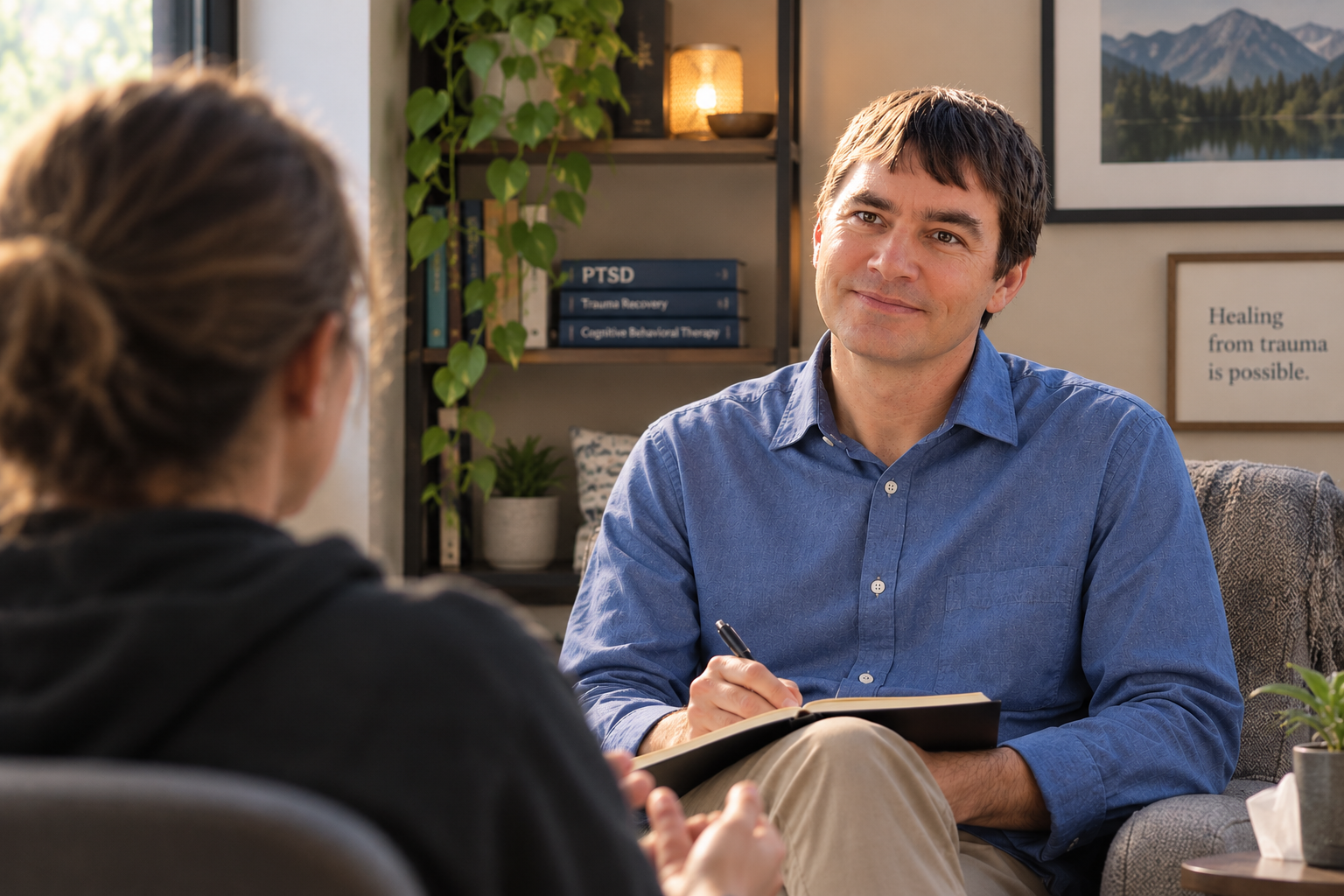
I work with adolescents and adults who are dealing with the effects of trauma, including PTSD, single-incident trauma, longer-term or repeated experiences, medical trauma or other types of adverse events. Many people I see are also dealing with anxiety, depression, or the stress of living with chronic illness or pain.
Who this therapy is for
Online trauma therapy in California
Everything happens by secure video, so you can meet with me from home, whether you're in Bishop, Mammoth Lakes, elsewhere in the Eastern Sierra, or anywhere else in California. That can make it easier to start, especially if a therapist with trauma experience isn't nearby.
Frequently asked questions
-
No. We go at a pace that works for you, and you decide what to share and when.
-
Many people do well with telehealth therapy, and research generally finds it can work comparably to in-person care for many conditions.
-
See my Appointments & Fees page for rates and insurance information.
-
Only a qualified clinician can diagnose PTSD. If you're not sure, a consultation is a good place to start, and we can talk through what you're experiencing.

Ready to take the first step?
You don't have to wait until things feel unbearable. A free, no-pressure 15-minute call is a simple way to see whether we're a good fit.